
SESSION 17 — Form As Vessel: The Elegy
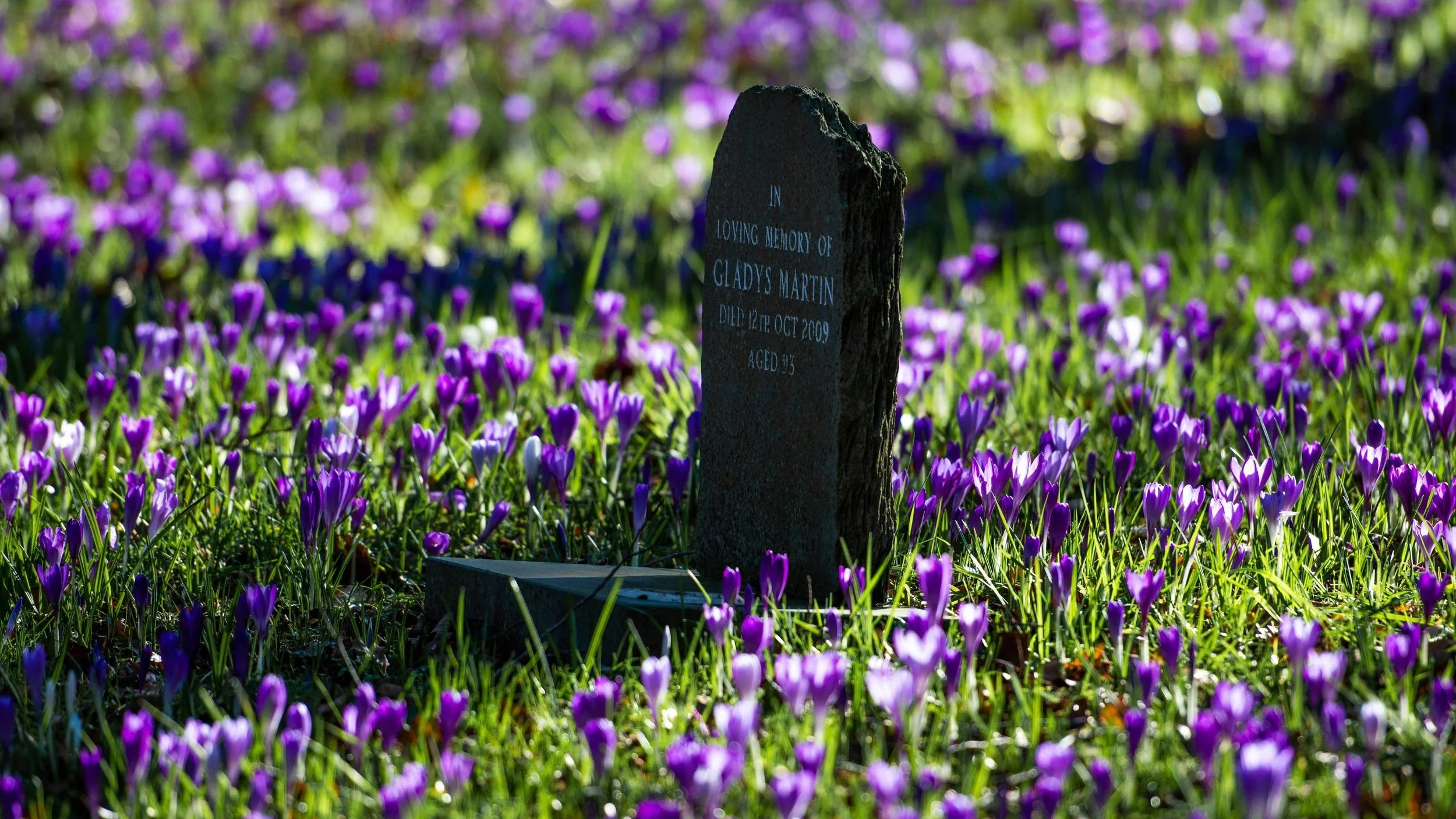
Photo by Richard Bell on Unsplash
Discussion:
An elegy is a poem that reflects on death or mortality, often with a sorrowful or nostalgic tone.
The term comes from the ancient Greek and Roman genre of poems, which were written with a distinctive metrical pattern.
Over time, the elegy developed into a more flexible form that could address various themes of loss and longing.
Elegies are usually written in the first person and offer a personal perspective on grief. Many elegies end with some form of consolation or hope, but this is not a requirement.
Who or what is Dylan Thomas grieving in his elegy “Do Not Go Gentle…”? What is the tone and mood of the poem? And how does its form (rhythm, rhyme, repetition, etc.) contribute to its elegiac qualities?
Do Not Go Gentle …
by Dylan Thomas (1914 - 1953)
Do not go gentle into that good night,
Old age should burn and rave at close of day;
Rage, rage against the dying of the light.
Though wise men at their end know dark is right,
Because their words had forked no lightning they
Do not go gentle into that good night.
Good men, the last wave by, crying how bright
Their frail deeds might have danced in a green bay,
Rage, rage against the dying of the light.
Wild men who caught and sang the sun in flight,
And learn, too late, they grieved it on its way,
Do not go gentle into that good night.
Grave men, near death, who see with blinding sight
Blind eyes could blaze like meteors and be gay,
Rage, rage against the dying of the light.
And you, my father, there on the sad height,
Curse, bless, me now with your fierce tears, I pray.
Do not go gentle into that good night.
Rage, rage against the dying of the light.
Writing Prompt:
Write your own elegy to someone or something you are struggling to let go of—it could be a person, a place, a time in your life, or even a version of yourself.
Start by asking yourself:
What loss am I holding onto? What do I wish I could say to it, even now?Then, as you write, try to build a refrain—a repeated line or phrase that captures the emotional core of what you want to express. For reference, you can look at how Dylan uses “Rage, rage…” and “Do not go gentle…”
Pay attention to how rhythm, repetition, and sound can shape the tone of your poem.
Will you plead, reflect, rage, or accept? Let your emotion guide the form.